Safeguarding Focus – Wellbeing - emotional literacy
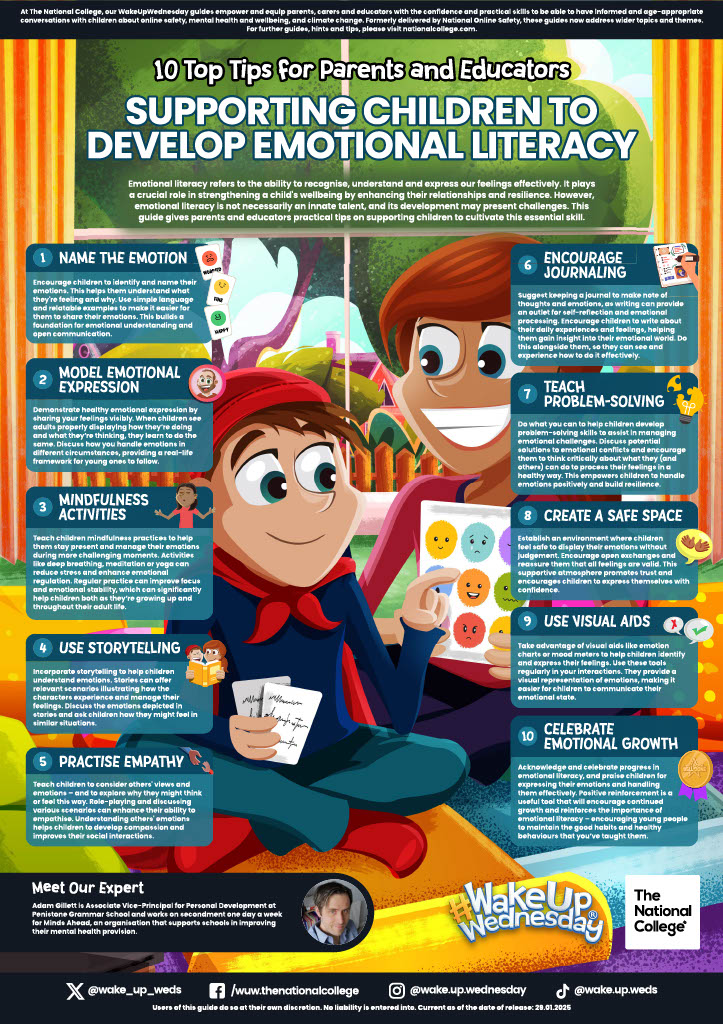
Emotional literacy for children is the ability to identify, understand, express, and manage their own emotions, as well as recognise and respond to the emotions of others. It is a crucial skill for healthy development; helping children manage stress, build strong relationships, and develop empathy. You can foster emotional literacy by labelling emotions, encouraging emotional expression, using games to explore feelings, and modelling empathy.
Label Emotions
Sometimes children can struggle to explain how they are feeling, and this can result in them acting in an angry or frustrated way. By identifying and accepting a child’s current emotion, it can help them to understand how they are feeling and begin to develop a better understanding and control of those emotions. Ultimately, this will enable children to express their feelings in a more positive way.
For example, you could say “You seem so excited” or “You’re crying, you must be sad”.
When children learn the words for their emotions, they can tell you what they’re going through. This means they’re less likely to use their behaviour to show how they are feeling.
Read the guide below and click here to find out more tips for supporting developing emotional literacy.