Skip to content ↓

Junior School News

Welcome to our latest news section, where you can read all about the latest events and stories from around the school.

Here, you can also view 'The Warwickian', our termly celebration of all things Warwick School.

Page 3

  • Safeguarding Focus – separation and divorce

    Published 01/05/26

    Separation and divorce aren’t easy.  There may be bad feelings between the parents and their families. Children can pick up on this, which may confuse or upset them, or even lead to them blaming themselves for a break-up.

    Working out how and when to tell children about a separation is never easy.  Remember, that while sharing the news is a big step, it's one step of many.  Separation and divorce aren't single events but processes that the whole family experiences.

    When talking about a separation, it’s important to find the balance between sharing so much with your children that they become overwhelmed, or so little that they don’t understand what’s going on.

    To support children during a separation and help them with their worries, it’s important to:

    • remind them that both parents love them
    • be honest when talking about it, but keep in mind the child's age and understanding
    • be careful how you speak about your ex-partner, as any negative comments could make your children feel confused or resentful
    • keep up routines, such as going to school and having specific mealtimes and bedtimes
    • explain that it's OK to be sad, confused or angry and let them know they can talk about their feelings with you
    Children’s responses

    Children can have a wide range of feelings in response to your news, and their feelings could change over time. Particularly if they're younger, they might struggle to say exactly what it is that they're feeling.  And no matter their age, some of their emotions may come out in their behaviour rather than their words.

    Some common responses include:

    • Anger – this could be directed at one or both parents or be a general sense of anger that their life is going to change.
    • Being upset – children might be upset at the prospect of change, or shocked by the news.
    • Grieving – children might grieve their 'old life' once the separation becomes a reality and they are having to get used to changes in the family.
    • Withdrawing – it's natural for children to withdraw from family situations if they're feeling hurt or confused. It's important not to force them to do anything while they're adapting to the news.
    • Relief – children pick up a lot on their parents' feelings, whether or not you've spoken about them. If it's been a tricky time for your family, a child might be relieved that something will be changing, and things could get better in time.

    Read the article in full and find out further advice.

    Read More
  • Year 3 instrumentalists join Rising Stars and Brass Monkeys

    Published 01/05/26

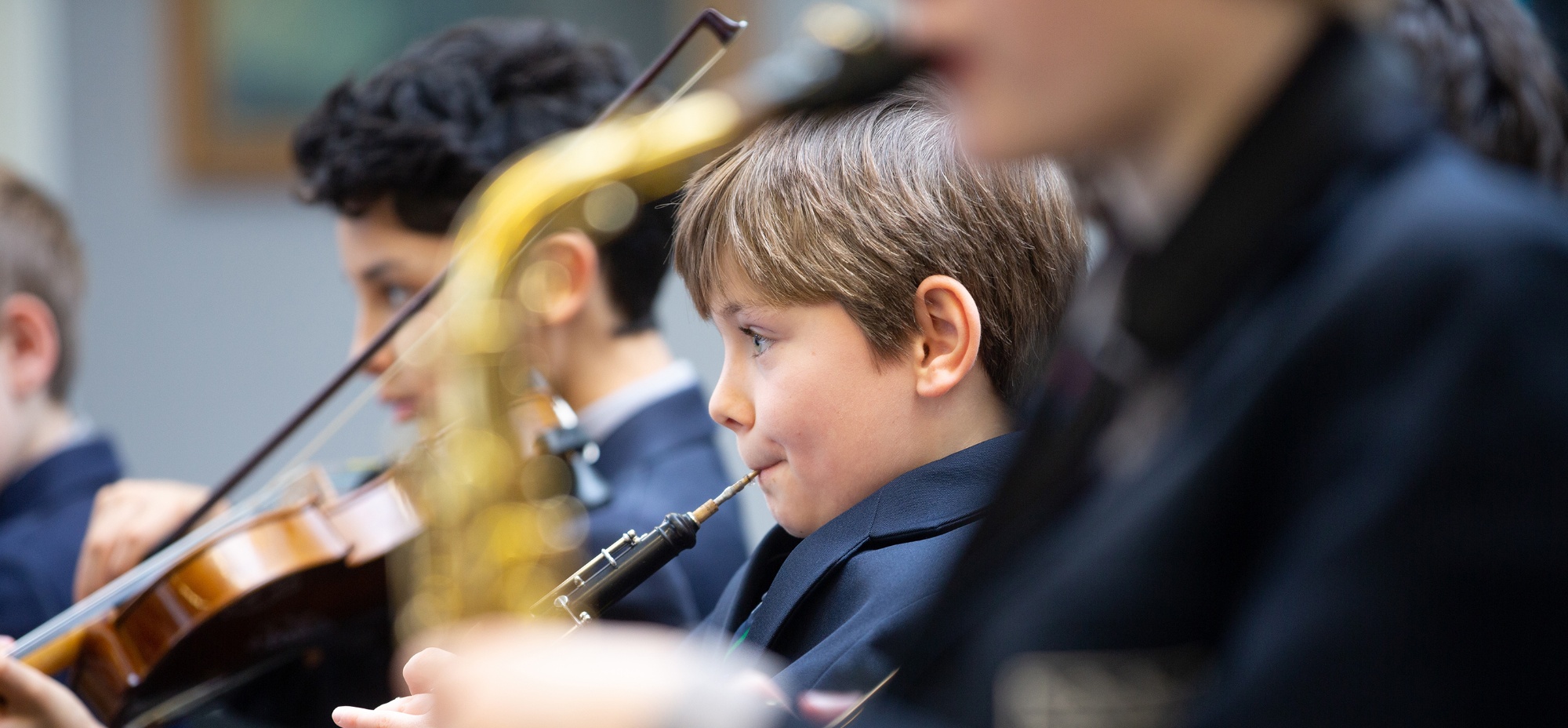
    Our Year 3 string and brass players from the instrumental scheme joined Rising Strings and Brass Monkeys last week. The boys are gaining a great deal from playing alongside more experienced students, who are also taking the time to support and mentor them. We look forward to their performances at the Summer Concert on 25 June.

    Read More
  • Alex shines at the County Chess Championship

    Published 30/04/26

    On Saturday 25 April, the Major and Minor finals of the English U9 County Chess Championship took place.

    The Warwickshire A and B teams, having qualified for the final as Midlands Champions, produced outstanding performances, much to the delight of Mr Lam, the county's Head Coach. Warwickshire A finished third in the Major final and Warwickshire B won the Minor Final with a 100% score.

    Among the players was Warwick Junior School's very own Alex. He showed just why he was deemed worthy of a call-up as he produced a fantastic performance on board 3 for Warwickshire B, scoring 3/4 despite being out rated in three out of the four rounds. Well done Alex!

    Read More
  • Year 4 Art Exhibition

    Published 30/04/26

    On Tuesday, artwork by all Year 4 pupils from both the Junior School and Warwick Prep School went on display. Now a tradition, the boys took inspiration from a female artist, Yayoi Kusama, and the girls took inspiration from a male artist, Pablo Picasso.

    The work looked brilliant together and the use of bright colours in contrasting styles really caught the viewers eye. Well done to everyone in Year 4! 

    Read More
  • Mr Bond's week in review - 24 April

    Published 24/04/26

    This week we started to focus on a new Learning Strength, Focus. In assembly on Monday, we discussed the importance of focusing in our learning and the challenges we can face when trying to concentrate on something. We also discussed the importance of ‘focus’ in our relationships and behaviours. Linking to St George’s Day, we also learnt about the ‘real’ St George and how despite pressure and distractions, he remained focused on doing the right thing.  

    It was wonderful to see so many parents taking the opportunity to visit their son’s 1:1 music lessons this week for our Music Open Teaching Week. On Wednesday, a group of Year 5 boys visited Kingsley School to take part in an ‘Apprentice’ style business challenge and on Monday there was an U10 and U11 swimming gala against Bablake. Today, we held the Ignis Charity Day, raising money for UNICEF. Starting with an informative assembly on Monday morning, Ignis organised an exciting day of activities and ‘rule breaking’ which raised money and awareness for an important cause; well done and thank you. 

    Huge congratulations to Alden in Year 6 who played in the IAPS Squash Championships this week, finishing 2nd - a fantastic achievement! 

    Wishing you an enjoyable weekend with your families, 

    John Bond 

    Read More
  • Safeguarding Focus – YouTube

    Published 24/04/26

    YouTube continues to be a very popular platform for entertainment, learning and creativity.  However, the easy access to the site, not needing to register for an account and being easily watched on a range of devices, along with its vast and largely unregulated content library, presents ongoing safeguarding challenges that parents need to consider.

    Algorithms that push out content to encourage further viewing, can have an impact on screen-time, as well as suggested viewing which may not be age appropriate, or contain misinformation/extreme views which are then reinforced through further recommended viewing suggestions.

    Explore more of the risks and some practical advice on tools such as YouTube Kids, supervised accounts and parental controls, to encourage a safer, more balanced and informed use of the platform.

    Read More
  • Magnificent Megafinal!

    Published 23/04/26

    On Sunday 19 April, the Birmingham Megafinal of the UK School Chess Challenge (UKCC), the second stage of one of the UK's most prestigious junior chess tournaments, took place.

    A number of boys from Warwick Junior School competed, keen to follow in the footsteps of Mr Lam who twice reached the Terafinal (the grand final of the UKCC), making the final 32 of the original 50,000 entrants, and Warwick Junior School alumnus Candidate Master Billy, who went one better than Mr Lam in 2024 by winning the Terafinal outright!

    Rideh was the youngest Warwick representative taking part but showed what a promising player he is by qualifying for the Gigafinal, the penultimate stage of the competition, for the U8 category. The same feat was achieved in the U10 categry by Ansh and Alex. Moreover, Alex finished joint-second overall, with an outstanding 5/6 in what was a very strong section, beating some of the county's best junior players.

    A big well done to everyone who competed on Sunday!

    Read More
  • Mr Bond's week in review - 17 April

    Published 17/04/26

    tIt was wonderful to welcome the boys back to school this week for the start of the Summer Term.  

    In the first assembly of the term, the boys reflected on the different emotions they might be feeling when returning to school. From excitement to tiredness, and nervousness to confidence, feeling such emotions is natural. Sometimes we think we know how people are feeling by their expressions and behaviour. The boys proved to be experts at reading the emotions represented by different emojis!  However, with the help of some optical illusions, I asked the boys to consider that sometimes what we see – or think we see – is not the truth. This is the same for people. We can all put on a different ‘face’ at times and actually what we are feeling is very different. We discussed the importance of not judging appearances, being empathetic, listening to each other and showing kindness as being important considerations as we head into the summer. 

    Next week, is the Music Open Teaching Week and I hope that those parents whose boys take individual music lessons, take up the opportunity to come into school to observe their son in their 1:1 lessons. We are also looking forward to Ignis Charity Day next Friday which is raising money for UNICEF. Some of the Year 6 Ignis boys will be revealing more about the day to the school in Monday’s assembly.  

    Wishing you a restful weekend, 

    John Bond 

    Read More
  • Safeguarding Focus – mobile phones

    Published 17/04/26

    The topic of if, and when, a child should be allowed to have a mobile phone, is one that is currently much debated.  The Government’s recent guidance, updated in February this year, states that:  All schools should be mobile phone-free environments by default; anything other than this should be by exception only.

    Across the Foundation Senior Schools, pupils are not allowed mobile phones – any that are brought into school must be locked in a pupil’s Yondr pouch during the school day.  Our policy at the Junior School is that no pupil should have a mobile phone or smartwatch in school.  Pupils who travel on school buses may bring in a phone, but a phone without internet connectivity is recommended, and this must be handed in to the office as soon as the pupil arrives in school.  No other pupil should have a phone in school at any time.

    However, at home, requests for a mobile phone may be made regularly by children to their parents and careful consideration should be given to the following questions before deciding to allow this.

    • Is my child ready for a phone?
    • How do I keep my child safe?
    • What’s the right approach for our family?
    • Are children and phones a good mix?

    Click here for more information and advice.

    Read More
  • Mr Bond's week in review - 27 March

    Published 27/03/26

    The highlight of this final week of term was the Spring Concert. The boys always impress with their musical skill and the confidence to perform in front of such a large audience in the impressive setting of the Warwick Hall. Led by Mrs Glover and supported by a dedicated team of instrumental teachers, boys from across the year groups performed songs inspired by countries from around the world. The range of genres and musical styles ensured a varied and entertaining evening. Thank you to all of the boys and staff who made the evening happen and all the parents and families who attended who gave the boys such encouragement and support. 

    Congratulations to those boys who received their colours and sports awards in assembly this week. Also, well done to all those boys who completed their music exams last week. Many of the results have come in and the boys should be proud of their efforts. 

    It has been another busy sporting week with football fixtures for Year 4 and 5 as well as year group swimming galas. The week also finished with Easter Fun activities run by our PAWS volunteers. 

    As we start the Easter holiday, I would like to thank you for your continued support of the school and your sons. A start of term letter will be sent out to parents on Monday 12 April and we look forward to seeing everyone return to school on Tuesday 13 April. 

    With best wishes, 

    John Bond 

    Read More
  • Open Homework Week - Space

    Published 27/03/26

    We would like to thank parents warmly for the positive support given during this term’s Space Open Homework. We have really enjoyed seeing the results of the boys’ hard work, with fantastic examples of research, imagination and creativity across all year groups. Pupils explored a wide range of topics, including black holes, GPS, possible alien life forms, space travel, planets, rockets and future missions beyond Earth.

    The boys shared their models, presentations, reports and creative outcomes with real enthusiasm and confidence, while classmates listened attentively and asked many thoughtful, probing questions. A few highlights have been Morgan’s felt solar system mobile, Rory’s explanation of the solar system which involved getting classmates to role play the planets, Adam’s knowledgeable presentation on Mars, using a Google Earth video ‘fly by’, Harrison’s newspaper interview with Neil Armstrong and Ronnie’s comic book on how Neil Armstrong became an astronaut – and there were many more outstanding pieces of work.

    Congratulations to all the boys for their hard work. It was a pleasure to see the pride they took in their work and the curiosity they showed about our universe. Who knows – perhaps one of our pupils will be part of a future lunar or Mars mission!

    Read More
  • Safeguarding Focus – self-harm

    Published 26/03/26

    Why do teenagers and children self-harm? 
    The reasons children and teenagers self-harm will be different for everyone. They might not be able to name any one reason they’re self-harming. 

    Self‑harm is usually a way for young people to cope with difficult feelings, memories, or situations. With understanding, compassion, and the right support, recovery is possible.  
     

    Signs of self-harm in children and teenagers 
    Self-harm is when someone hurts themselves on purpose as a way of expressing or relieving distress, overwhelming emotions, or fear.

    It can be hard to recognise the signs of self-harm in children and teenagers, but it’s important to trust your instincts if you’re worried something’s wrong. 
     

    Some common forms of self-harm include:  

    • Cutting themselves. 
    • Burning their skin.  
    • Scratching or biting themselves. 
    • Hitting themselves or walls. 
       

    But self-harm isn’t always visible. It can also include taking part in risky or harmful behaviours, such as:  

    • Using drugs or alcohol to cope with problems. 
    • Unsafe sexual behaviour. 
    • Disordered eating, such as under- or over-eating. 
    • Excessive exercising. 
    • Doing dangerous things / acting in a reckless or unsafe way
       

    It can be hard to see self‑harm, especially since many people try to hide it. If you’re concerned, here are common signs to watch for: 

    • Unexplained cuts, bites, burns, bruises, bald patches. 
    • Always keeping themselves fully covered, for example, wearing long sleeves or trousers even during hot weather or avoiding activities such as swimming.  
    • Signs of depression, anxiety or mood swings.   
    • Withdrawing from friends or family.  
    • Expressing low self-esteem, for example, saying they’re not good enough. 
       

    Things to do to help:

    • showing them you’re there whenever and however they choose to talk 
    • listening and not asking too many questions about why they've self-harmed, which may make them feel judged 
    • letting them know that you care about them and want to help them find healthier ways to cope 
    • reassuring them it’s OK to be honest with you about what they’re going through.  
    • focus on what's causing the self-harm - remember, an underlying problem often causes self-harm. It can be more helpful to focus on what’s causing their feelings rather than on the self-harm itself. 
    • Encourage them to find healthy ways to cope e.g. paint, draw or scribble in red ink, deep breathing or going for a walk 
    • Help them to build their confidence.  Many children who self-harm suffer from low self-esteem or confidence.  

    Remind them about the things they do well. Try to focus on things about their personality rather than things like their academic achievements or sporting abilities. 

    • Encourage them to try something new e.g. drawing, music, exercise 
       

    Below are some useful websites for tips and advice: 

    https://www.nspcc.org.uk/advice-for-families/self-harm/

    https://www.barnardos.org.uk/get-support/support-for-parents-and-carers/self-harm-children-young-people#signs

    Advice for children can be found via Childline: https://www.childline.org.uk/info-advice/your-feelings/self-harm/self-harm-coping-techniques/ 

    Read More