Reading List
Evidence suggests that reading for just a few minutes a day can have significant long-term benefits for an individual.
 Unsurprisingly, it leads to greater academic outcomes as high levels of literacy enable young people to access complex texts and critically evaluate material, as well as improve their own fluency of expression. Enhanced comprehension and critical thinking abilities translate into better performance in exams and coursework across all subjects (Jerrim and Moss Citation2018; Martin-Chang, Kozak, and Rossi Citation2020).
More importantly, reading helps in developing well-rounded individuals with a deeper understanding of their world. It exposes us to new ideas and perspectives and broadens our understanding of current affairs. In today’s digital age, with constant distractions, reading helps sharpen focus and concentration skills, improving memory and brain connectivity.
Reading improves our empathy and emotional intelligence, enabling us to build positive relationships and navigate social situations. It has been proven to reduce stress, providing a break from everyday pressures, and can inspire and motivate the reader to set goals or discover new interests. As novelist Somerset Maugham put it, “to acquire the habit of reading is to construct for yourself a refuge from almost all the miseries of life.”
Strong reading skills are universally valued by employers who are seeking people who can communicate effectively and adapt to new challenges. In his book ‘Atomic Habits’, James Clear suggests that to really integrate a habit into our lives it has to become part of our identity. We have to think and behave like the person we want to become. If we want to be empathetic, articulate, analytical and broad-minded, we must read.
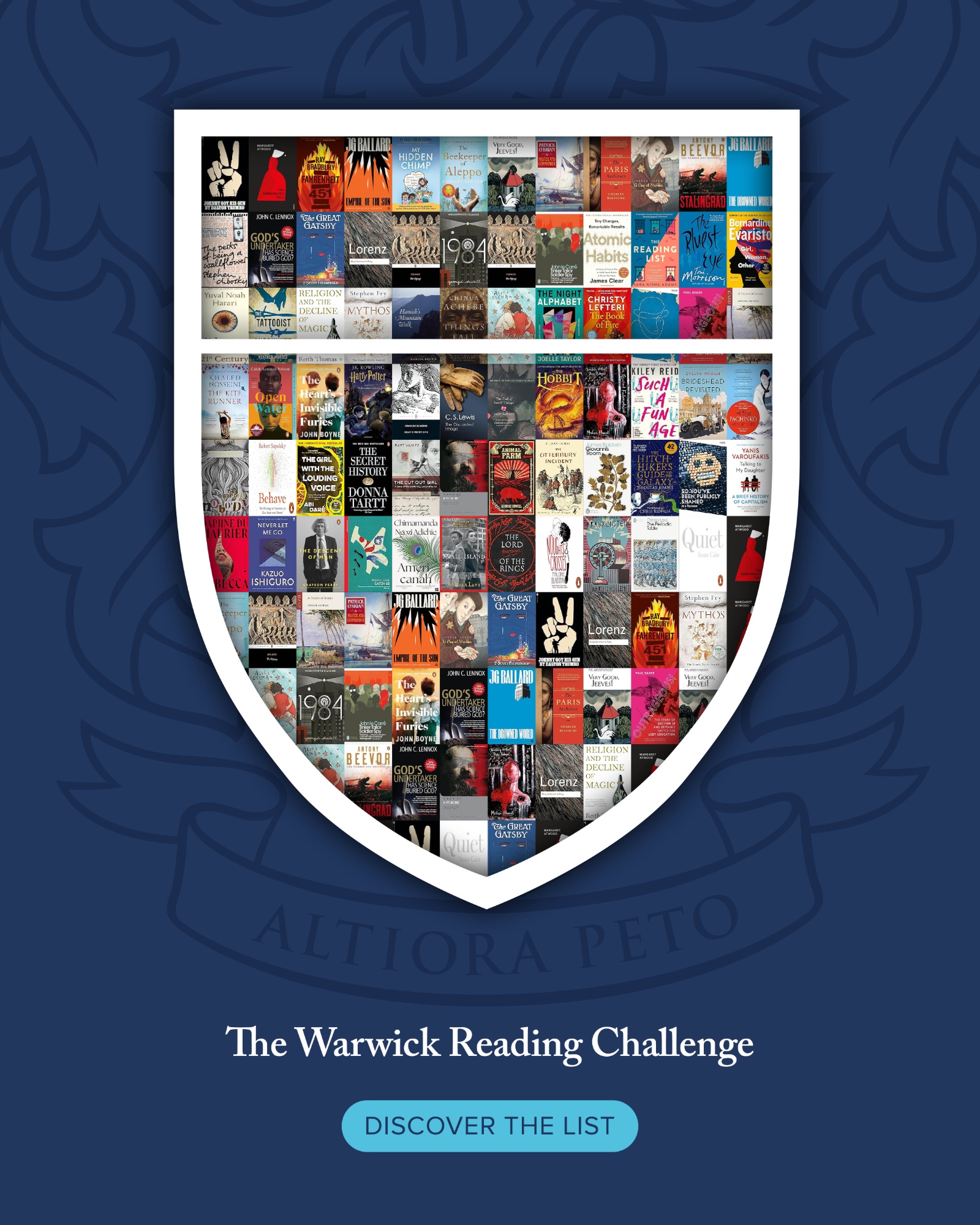
The staff at Warwick School have complied a list of books they love; books they believe a Warwick School pupil should read before he reaches adulthood. Mr Barker has challenged every pupil to read as many books from the list as he can and to strike up a conversation with the staff about the books they have recommended. The list is inevitably wide-ranging as it reflects the teachers’ diverse range of interests, and it will therefore enable pupils to follow the advice of Samuel Johnson: “Read the book you do honestly feel a wish and curiosity to read.”