Aim for higher things; read more
The summer holidays already seem like a dim and distant memory. To my mind the most valuable thing about the long holiday is that it allows us to step outside our normal routines. Term time is full — lessons, homework, sport, music, CCF, drama, House events, exams. It is busy and structured. But in the summer, there is space.
Space to rest. Space to travel. Space to try something different. To spend time doing things you don’t usually get the chance to do. And that change of rhythm is refreshing.
One of the ways I like to use that time is to read. To read properly. Because, in term there’s rarely enough time to sit and give myself over to a good book.
This summer, I set out to make more time for reading. And I did. On Mr Jefferies' recommendation, I read East West Street by Phillipe Sands, a powerful account of how the legal concepts of “genocide” and “crimes against humanity” were born out of the horrors of the Second World War. I read An Artist of the Floating World by Kazuo Ishiguro — a beautifully written exploration of memory, guilt, and responsibility in post-war Japan. I read Blink by Malcolm Gladwell, which investigates the way human beings make split-second decisions — and how those decisions can be both brilliant and flawed.
And I read Dream Count, the new novel by Chimamanda Ngozi Adichie. Adichie is one of my favourite authors. Her earlier novel Americanah is the one I have chosen to recommend in the Warwick School Reading List we have launched this term.
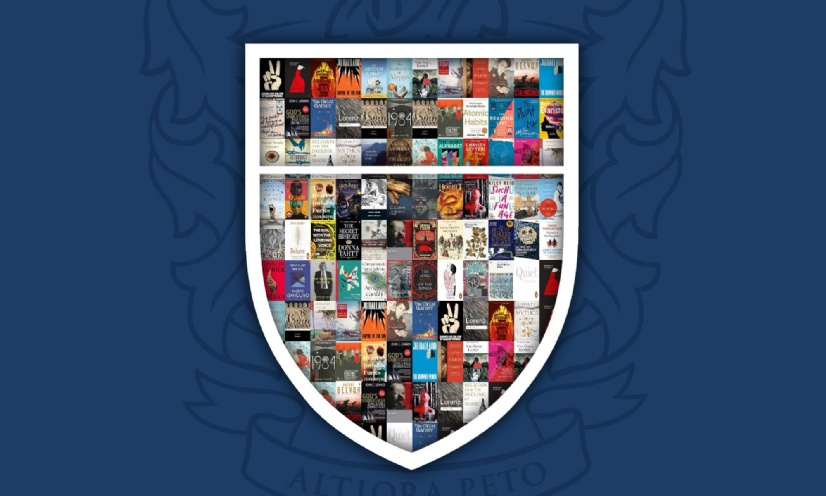
Curated by Mrs Quinn, Warwick School staff have been compiling our first ever official reading list. It contains books we believe every Warwick School pupil should aim to read before they leave school. It is not an exam syllabus. It is not a compulsory homework task. It is an invitation and a challenge.
The list contains more than fifty books. Some are classics. Some are contemporary. Some are fiction, some non-fiction. Some are short and approachable; others are longer and more demanding. All of them, though, have been chosen by the teachers because they matter. Because they are powerful. Because they have the ability to shape minds, stir imaginations, and develop the character of the reader.
Here are just four examples:
- Things Fall Apart by Chinua Achebe. Mrs Albrighton recommends this novel for anyone interested in colonial history. Written by a Nigerian, it tells the story of Africa from the perspective of those who lived it, rather than through the lens of empire. It is a story of power, identity, and change. She says it is a book she will return to many times.
- Stalingrad by Antony Beevor. Mr Miller calls this “the best book ever written on the Second World War.” He first read it as a Sixth Former and describes it as gripping and ground-breaking. It takes one of history’s bloodiest battles and makes it accessible, vivid, and human. A reminder that non-fiction can be just as absorbing as any novel.
- The Hitchhiker’s Guide to the Galaxy by Douglas Adams. Mrs Taylor recommends this brilliantly witty, comic science fiction. A permanently bemused narrator, travelling through space, trying to make sense of the universe — and failing spectacularly. It is a reminder that reading can be light, joyful, and hilarious.
- Noughts and Crosses by Malorie Blackman. Mrs Morgan recommends this gripping modern classic. On the surface it is a love story, but beneath it is a sharp exploration of race, power, and prejudice. She describes it as a page-turner packed with plot twists, but also a book that forces us to examine our own assumptions.
That is just four. There are dozens more, Girl, Woman, Other by Bernardine Evaristo, 1984 by George Orwell, The Odyssey by Homer, Catch 22 by Joseph Heller. Books from every continent, every genre, every mood.
We challenge the boys to read them all before they leave Warwick.
Why is reading so important? Surely it is enough to do the required reading for lessons, to revise thoroughly, to master the set texts?
Of course, those things matter. But reading beyond what is required matters too. It strengthens the mind. It improves vocabulary and comprehension. It teaches you to think more clearly. Research shows that pupils who read for pleasure not only achieve higher literacy levels but perform better in every subject — science, maths, languages, humanities. Reading develops the brain in ways no other activity quite can.
It is also one of the best forms of mental exercise. Just as playing sport strengthens muscles, so reading strengthens your ability to focus, to process, to make connections. It even has physical benefits: lowering stress levels, aiding sleep, improving wellbeing.
But reading is not just about grades and exams. It is about the heart as well as the head. When you read, you enter another person’s world. You see through their eyes. You begin to understand their experiences, their struggles, their hopes.
Uju Asika, the author of Bringing Up Race who spoke to us here at Warwick School a few years ago, put it beautifully:
“Books will save the world because they allow you to see it through others’ eyes.”
In an age when our world is divided by politics, by prejudice, by algorithms that only feed us our own point of view, reading is one of the most powerful antidotes. Books broaden horizons. They challenge assumptions. They cultivate empathy. They remind us that our perspective is only one amongst many.
Think of Achebe showing us the experience of colonialism from an African perspective. Think of Adichie showing us what it means to move from Nigeria to America, to navigate race, identity, and belonging. Think of Ishiguro, whose novels ask us to reflect on memory, responsibility, and regret.
Books remind us of our shared humanity.
But let me also say this: reading should not always be “worthy” or “improving.” It should also be fun. That is why the Reading List includes comic novels, fantasy, thrillers, and adventures. Because the simple joy of being absorbed in a story — of laughing, of wondering what happens next, of finding a character you love — is reason enough to read.
When I was a boy, I devoured Roald Dahl, Willard Price adventure stories, and Enid Blyton’s Famous Five. As an adult it is Phillip Pullman, Graham Greene, David Mitchell and Amitiv Ghosh. Some of my most vivid memories of summer holidays are lying on a beach or sitting in a tent, absolutely lost in a book. That sheer joy is something I want each of our pupils to experience.
Encourage your sons to ask us about our choices. And share what they are reading too. To talk about books with each other. Reading is often a solitary activity, but it is also one of the best starting points for conversation, debate, and friendship.
I want to set every pupil a challenge.
First, read something from the Warwick School Reading List. They can borrow copies of every book on the list from the school library.
Second, make time for reading in their daily life. Switch off the phone, turn off the screen, and give themselves half an hour in the evening, or at the weekend, simply to read.
And third, talk about what they are reading. Ask each other. Ask their teachers. Share recommendations.
Because one of the greatest adventures you will ever go on requires no passport, no suitcase, no flight. Just a good book.