Broadening horizons beyond the classroom: How educational visits teach us to find balance, and shape character
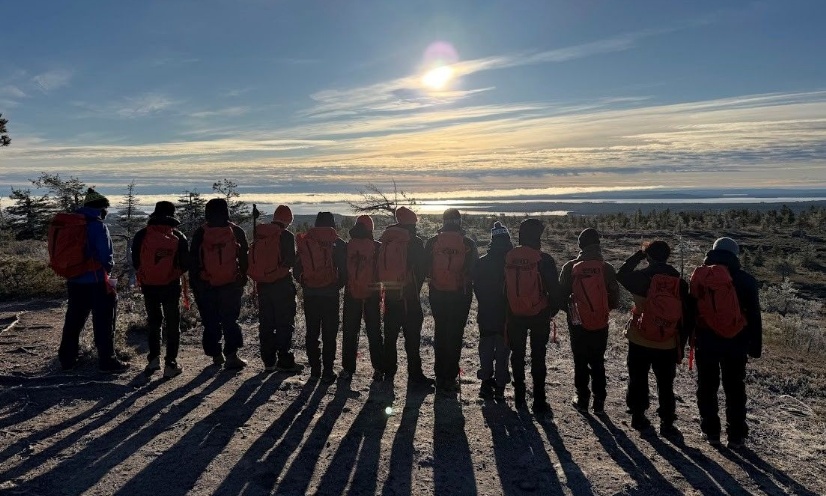
It has been wonderful to hear this week about the extraordinary array of educational visits that took place over the half-term break. From two trips to Finland, a Year 8 and 9 Hockey tour to Jersey, a Third and Fourth XV rugby tour to Biarritz, a Sixth Form trip to Paris, to a CCF camp in Leek – each offered its own distinctive experience, yet all offered new challenges, fresh perspectives, and lasting memories.
In a single term last year, 617 pupils participated in at least one educational visit, including seven residentials. The trips to Finland were two of five new trips added to the calendar, ensuring that opportunities to travel overseas are not limited to those who play a major team sport or study particular subjects. Offering such an extensive and diverse range of experiences is demanding and depends on teachers who willingly sacrifice their holidays and time with their families to plan and lead these trips. I am hugely grateful to my remarkable colleagues for their unflagging willingness to say “yes!”
Why then do Warwick School and its staff invest so much time, energy and resource into providing these opportunities?
These trips are more than exciting adventures that create lifelong memories – though that in itself would be reason enough. Educational visits are not an optional extra; they are a deliberate part of our approach to character education which lies at the heart of The Warwick Way. They offer invaluable opportunities for personal growth that cannot be replicated in the classroom.
Through these experiences, pupils actively engage with our six core values: courage, creativity, curiosity, humility, perseverance, and responsibility.
These values are not abstract ideals. They are lived daily, sometimes in surprising and subtle ways, and it is not always clear what they look like in practice. A recent experience illustrated this perfectly. Every year we interview pupils for leadership positions. Every year – thoughtful, articulate, impressive young men who would do a fantastic job are left disappointed. This year was no exception. When one disappointed candidate asked for feedback, I encouraged him to “sell himself a little more.” He replied:
“I’d rather be somewhere that recognises humility than be told to be more arrogant.”
It was an admirable response – but it also revealed something important: values are complex. Humility, like all values, is not fixed; it looks different in different situations. There are moments when humility means stepping back – and others when it means confidently stepping forward. The challenge lies in knowing the difference.
This is not a new dilemma. The ancient Greeks grappled with it too. One of their most famous myths – Dedalus and Icarus, recorded by the Roman poet Ovid in his Metamorphoses – illustrates this point.
Daedalus was a brilliant craftsman who designed the Labyrinth for King Minos of Crete. According to Ovid, Daedalus eventually grew to hate Crete and decided to return home to Athens. However, Minos was determined to keep the inventor close to him, so he imprisoned him and his son Icarus in a tower overlooking the ocean. Desperate to escape, Daedalus studied the movements of birds and fashioned two sets of wings from feathers, thread and beeswax. Before taking to the air, Daedalus warned Icarus:
‘Fly the middle path – not too high, or the sun will melt the wax; not too low, or the sea will ruin the wings.'
Exhilarated by the freedom of flight, Icarus ignored the warning, flew too close to the sun; the wax melted, and he fell into the sea and drowned.
This story is often told as a warning against arrogance – “don’t fly too high.” Yet the second half of Daedalus’ advice - “Don’t fly too low” - is just as important. The lesson is not simply to avoid arrogance, but to find the balance Aristotle called The Golden Mean.
Every value sits between two excesses: courage between cowardice and recklessness; perseverance between giving up too easily and stubbornness; humility between arrogance and false modesty.
As the philosopher Will Durrant observed:
“…the golden mean is not like the mathematical mean… it fluctuates with the …circumstances of each situation.”
In other words, courage, creativity, curiosity, humility, perseverance or responsibility depend on context – on judging the “right action, at the right time, in the right way.” Aristotle called this phronesis – practical wisdom.
Practical wisdom is not something we are born with; it is developed through experience. It is honed by stepping into the world, encountering new experiences and making judgements. The opportunities that experiences beyond the classroom offer. Each tour, expedition, and service project provides opportunities to practice our values in the real world.
In every moment outside one’s comfort zone, in every act of teamwork or moment of reflection, pupils not only learn about the world – they learn about themselves. They develop the ability to find balance – the courage to step forward, the humility to listen, the curiosity to explore, and the wisdom to know the difference.
This is the essence of the Warwick Way: education in its true sense, where horizons are broadened, character developed, and wisdom gained through experience.