
Photos, memory and being present
Like many of you, I used the Easter holiday as an opportunity to take a break. My family and I travelled to Quinta do Lago, Portugal, our first proper holiday together since the twins were born just over 18 months ago. I have a new camera, and I was keen to use it. I didn’t want to miss a thing: my children playing in the sand, laughing in a restaurant, or discovering the sea for the first time.
I found myself reaching for the camera again and again. Part of me was worried that these moments might slip from my memory if I didn’t capture them. But gradually, another thought crept in: Was my desire to preserve these moments actually stopping me from experiencing them fully? I began to wonder whether my camera, intended to help me remember, might in fact be making it harder to do so, as well as interfering in the moments themselves.
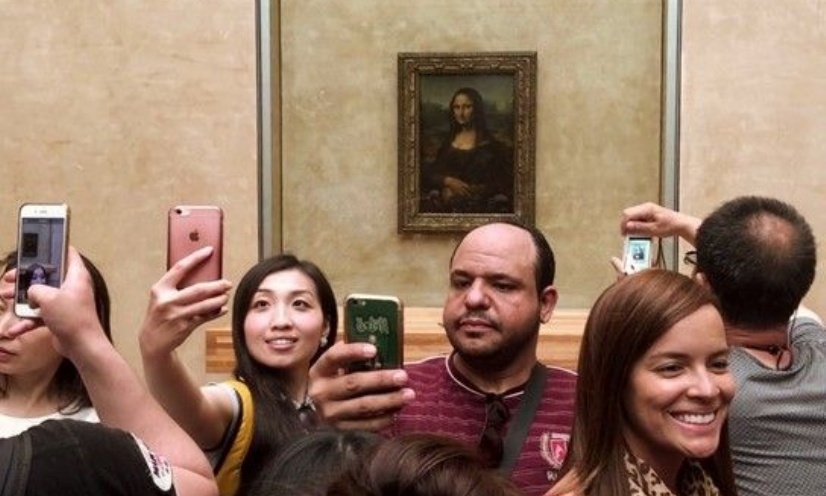
That thought reminded me of a very different experience. Some years ago, I queued for a long time to see the Mona Lisa in the Louvre. When I finally reached the front, I felt… underwhelmed. Not just because it’s smaller than you expect, but because of the crowd around me. So many people stepped forward, took a photo or a selfie, and immediately stepped away, barely pausing to look at arguably the most famous painting in the world. Their desire for a souvenir of the moment had taken precedence over the moment itself.
I feel the same frustration at concerts and big events when I see people spending most of their time filming rather than listening, seeing, soaking up the moment. If you go to a concert and spend 90 minutes trying to get the perfect angle, you impact not only your enjoyment, but the memory you carry away with you. That said, snapping a quick photo during your favourite song can provide a wonderful memento, a portal back to a time and place. The issue, as with so many things, is balance.
We live in an age of photographic hyperinflation; smartphones mean that the number of photos that would have filled a film camera can be taken in a couple of minutes. The average person now takes around 15 photos a day and carries thousands of images in their camera roll. In 2023 alone, an estimated 5.3 billion photos were taken worldwide.
A beautiful sunset. A great meal. A gym session. A concert. What do we do? We reach for our phones. Cherished memories deserve their place, whether on the mantelpiece or in a photo album. They can help us reconnect not only with a past moment, but with things not directly captured in the picture. A photograph of you in Year 5 might lead to memories of a school play, a residential trip, or the friendships formed. However, research increasingly suggests that our constant urge to capture everything may be affecting our memory, our attention, and our ability to stay fully present.
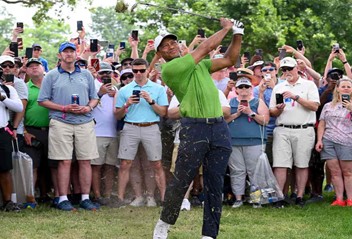
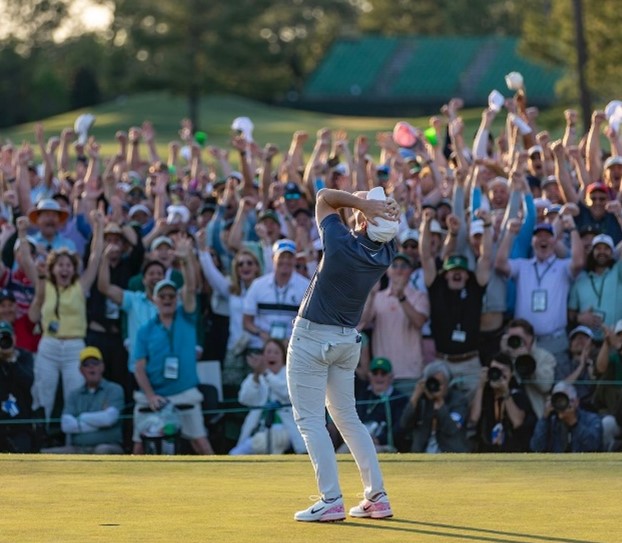
Unlike almost every other major sporting event, at the US Masters there is a strict no-phone policy. Spectators are not allowed to bring mobile phones onto the course. No photos, no filming, no social media. The organisers at Augusta are explicit about the reasoning behind the policy. It is not about nostalgia or control, but about preserving the quality of the experience itself. Without phones, people talk more. They watch more closely. They pay attention to the rhythm of play, the atmosphere the sounds of the course, the reactions of those around them. By removing the distraction of phones, they encourage people to be fully engaged with where they are and what they are seeing. It is a powerful reminder that sometimes the way we protect experiences, and the memories they generate, is not by recording more, but by paying closer attention.
This.... Compared to...
Scientists agree: The first step to forming a lasting memory is paying attention. Taking photos of an experience we want to remember can actually impede our ability to form memories of that experience. Linda Henkel a cognitive psychologist at Fairfield University in Connecticut, calls this the photo taking impairment effect.
One study in the Journal of Experimental Social Psychology illustrates this brilliantly. Participants were taken on a tour of Stanford Memorial Church — an extraordinary building filled with mosaics, stained-glass, angels, and a vast fresco above the entrance. Some participants were asked to take photos during the tour; others weren’t. A week later, they were given a surprise quiz. Those without cameras remembered significantly more detail than those who had been taking photos. Simply having the phone and using it reduced memory. Why? Because the camera became a distraction.
There’s another idea at play too, known as cognitive offloading. This is the idea that we increasingly outsource our thinking and remembering to devices. If we know something is saved, we make less effort to remember it ourselves. This isn’t always a bad thing. Few of us mourn the loss of memorising phone numbers. But it raises an important question: How much of our own lives do we want remembered by our phones instead of our minds?
There’s also the problem of narrowed attention. When we’re hunting for the perfect shot, we’re not fully listening, smelling, feeling, or noticing. We miss the details, the texture, the atmosphere, the emotions, that make experiences rich and meaningful. Real-life experiences are immersive. They engage all the senses. When you look back at photos of a trip, will you remember what the food tasted like, what the air felt like, or how the place sounded, or just that it looked good? Photos are always only a thin slice of reality. They can act as useful memory cues, but they rarely tell the whole story.
So, what’s the answer? This is not a call to abandon cameras or phones. Photography has value. Images matter. But it is a call for mindfulness. Think about why you are taking a photo? What are your goals? If your aim is to document an important experience, then it is important to have that important experience. There is a danger that, rather than viewing experiences through our own eyes, we view them through a viewfinder or a smartphone screen. Not inhabiting the moment but recording it. And if we’re only ever recording, we’re not really living.
The key is to find balance, to live in the moment but create a record as well. To enjoy a wealth of rich memories and have the images to bring them back to life. Take a couple of photos. Take them deliberately. Focus on what you genuinely want to remember. Then put the phone down. Look around. Notice what you’re feeling. Let your mind do some of the remembering too. Later, look back at the pictures. Share them. Reminisce. Remember; photos only truly come alive when they act as a portal back to a rich, authentic experience, one filled with attention, emotion and presence. Without that, looking at the picture is like watching a movie rather than reliving a moment.
So, my challenge is a simple one: The next time you reach for your phone, pause, just for a second, and ask yourself: Am I capturing this moment, or missing it?